Nothing is more frustrating for a building owner than discovering ceiling dampness, dripping rainwater, or hairline cracks only a few months after completion. In our 15+ years of executing structural concrete across Mumbai, Pune, Thane, Navi Mumbai, and Palghar, we have inspected hundreds of sites where minor negligence resulted in lakhs of rupees in waterproofing repairs.
The 10 Fatal RCC Mistakes to Prevent on Site
1. Missing or Displaced Cover Blocks
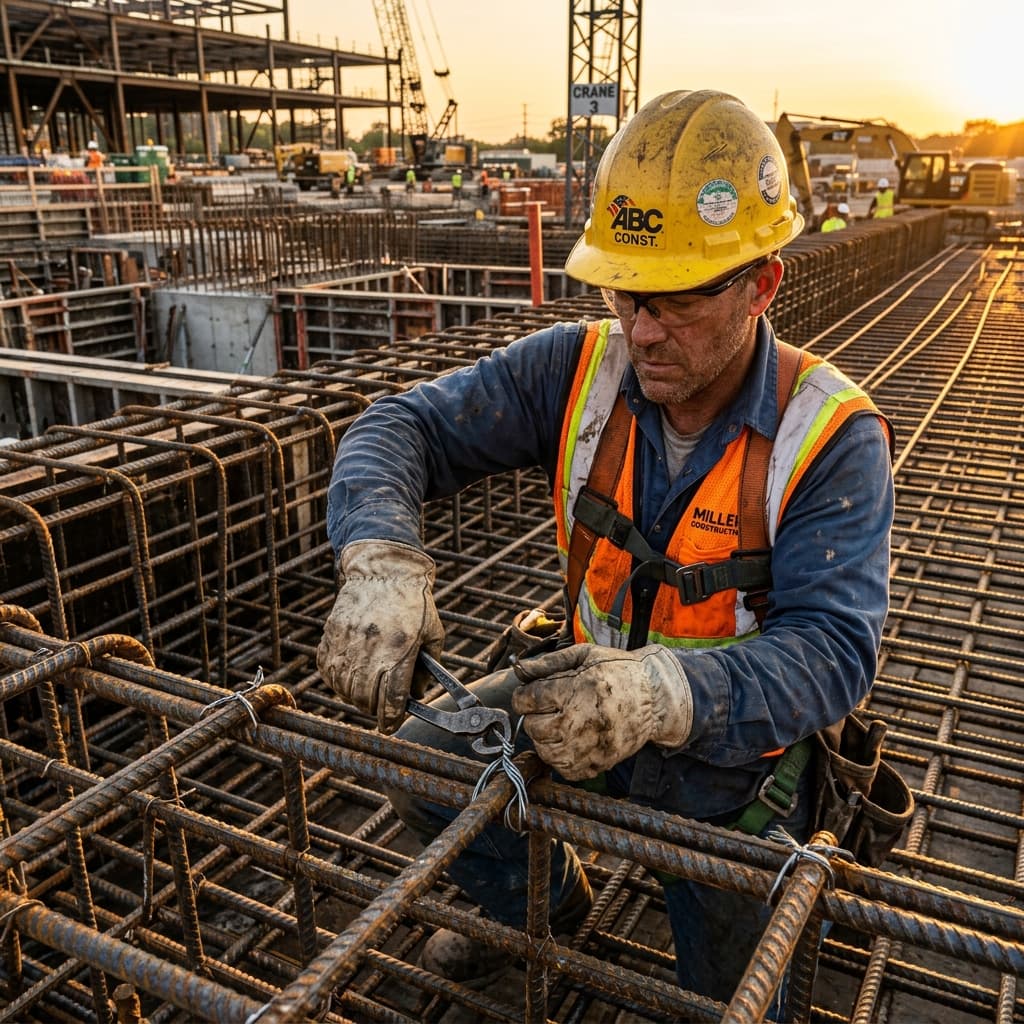
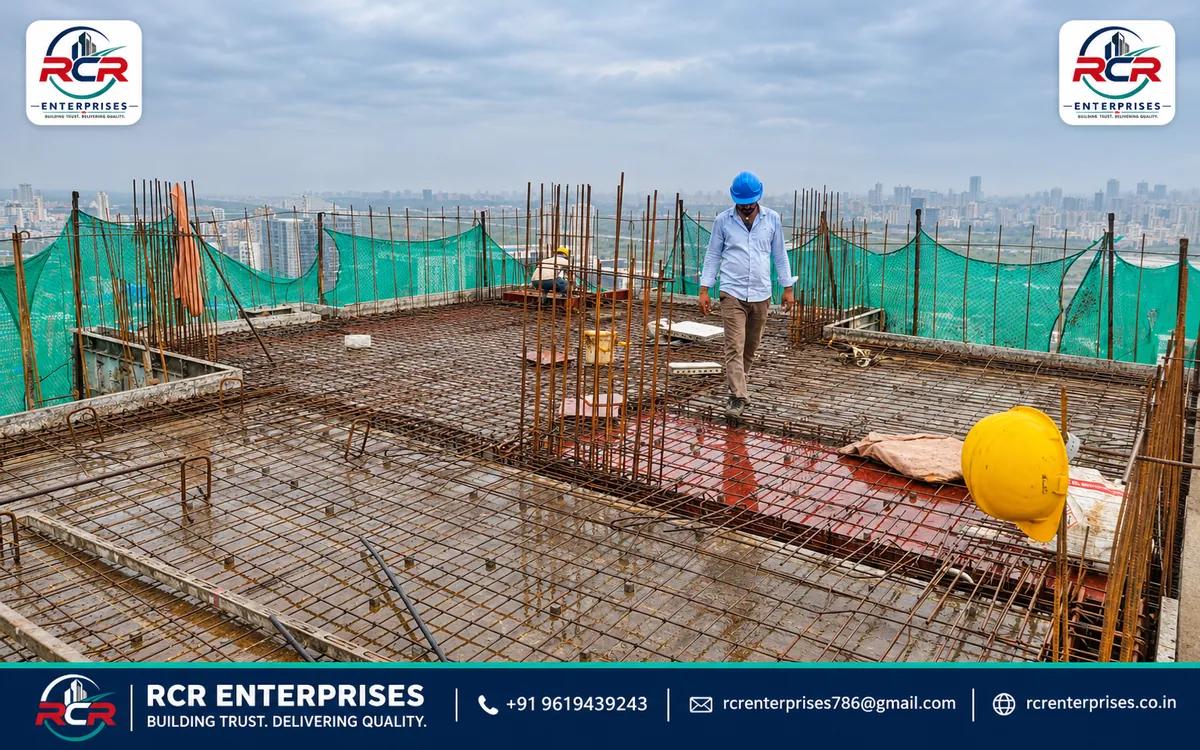
Cover blocks maintain a crucial 20mm to 25mm clearance between the bottom shuttering plate and the steel mesh. When workers walk over the rebar without cover blocks, the steel settles directly onto the shuttering, leading to immediate rust bleed and water seepage after monsoon rain.
2. Leaking Shuttering Joints (Loss of Cement Slurry)
If plywood formwork joints are not tightly taped or sealed with foam, water and liquid cement slurry bleed through the gaps during vibration. What remains is porous, aggregate-heavy concrete prone to capillary seepage.
3. Over-Vibrating or Under-Vibrating Concrete
- Under-vibration: Causes hollow cavities (honeycombing) through which rainwater easily finds its way.
- Over-vibration: Causes segregation, where heavy stones sink to the bottom and weak slurry floats to the top, resulting in plastic shrinkage cracks.
4. Pouring Concrete in Direct Scorching Afternoon Sun
In hot summer conditions (35°C+), concrete loses water through rapid evaporation before hydration takes place. This produces rapid surface tensile stress, yielding spiderweb map cracks across the top surface.
5. Inadequate or Delayed Water Curing
Ponding curing must begin within 12 to 18 hours of casting, as soon as the concrete surface resists light thumb pressure. Premature drying stops strength gain and leaves the slab porous.
6. Improper Electrical Conduit Layout Routing
Clustering 4 or 5 PVC conduit pipes tightly in one narrow beam or slab section creates a plane of weakness where concrete cannot penetrate. Pipes must be staggered with at least 50mm clearance between each run.
7. Walking on Fresh Concrete Without Wooden Gangways
Laborers carrying iron pans directly stepping on wet concrete displace top reinforcement and create micro-depressions that hold puddles and weaken the top cover.
8. Cold Joints from Pouring Interruption
If concrete delivery halts for more than 45 minutes without an engineered construction joint, the initial layer sets, creating an unbonded cold seam where water enters easily.
9. Premature Removal of Props (De-shuttering)
Stripping slab bottom props before 14 to 21 days places full dead load on immature concrete, causing irreversible micro-deflections and hairline sagging cracks.
10. Neglecting Integral Waterproofing Liquid in the Mix
Adding certified plasticizing waterproofing admixtures (e.g., Dr. Fixit LW+ or SikaPlast) drastically lowers capillary porosity, ensuring an impenetrable slab matrix.
Have an existing slab with cracks? Explore our Structural RCC Solutions and Renovation & Crack Injection Services to fix structural defects before they worsen.
Contact the expert engineers at RCR Enterprises for guaranteed leak-proof Slab Casting Work backed by written quality assurance across all Maharashtra locations.
Planning a Civil or RCC Project?
Talk to our master engineers and get direct item-rate or turnkey quotations.