Many buildings constructed in the 1980s and 1990s across Mumbai, Pune, and Thane suffer from carbonation attack, spalling concrete, and corroded rebar. When a structural audit reveals that load-bearing columns have lost compressive capacity, demolition is not the only answer. Column Jacketing and Structural Retrofitting can restore and even double the load-bearing capacity safely and economically.
What is RCC Column Jacketing?
RCC Jacketing involves encasing the existing distressed column with a new outer collar of high-tensile steel rebars and high-strength non-shrink micro-concrete. This increases both the cross-sectional area and the axial load capacity of the column.
Step-by-Step Column Jacketing Execution
Step 1: Temporary Load Propping (Relieving the Column)
Before touching the distressed column, heavy-duty adjustable steel shores (or hydraulic jacks) must be erected around the column from the foundation up to the beam soffit. This relieves the column of live loads and slab dead load.
Step 2: Concrete Chipping & Rebar Rust Treatment
The decayed outer concrete is carefully chipped away using light pneumatic breakers until sound aggregate is reached. Exposed corroded rebars are wire-brushed to bare metal and treated with a zinc-rich anti-corrosion primer.
Step 3: Chemical Rebar Anchoring & Shear Dowels
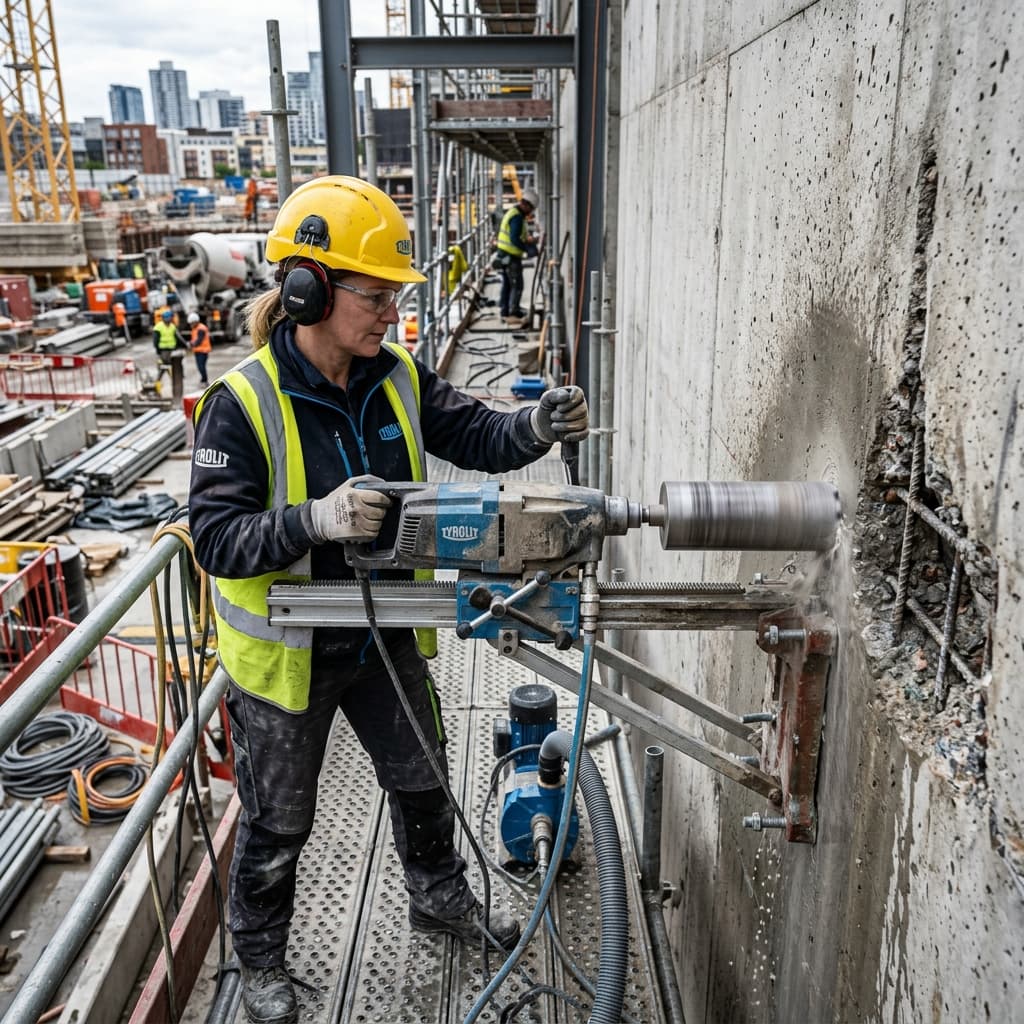
To ensure the new jacket acts monolithically with the old column, holes are drilled into the footing, old column core, and top beam. High-strength pure epoxy anchoring chemical (e.g., Hilti HIT-RE 500 V4 or Fischer FIS-EM) is injected, and shear dowel bars are embedded.
Step 4: Fixing New Rebar Cage
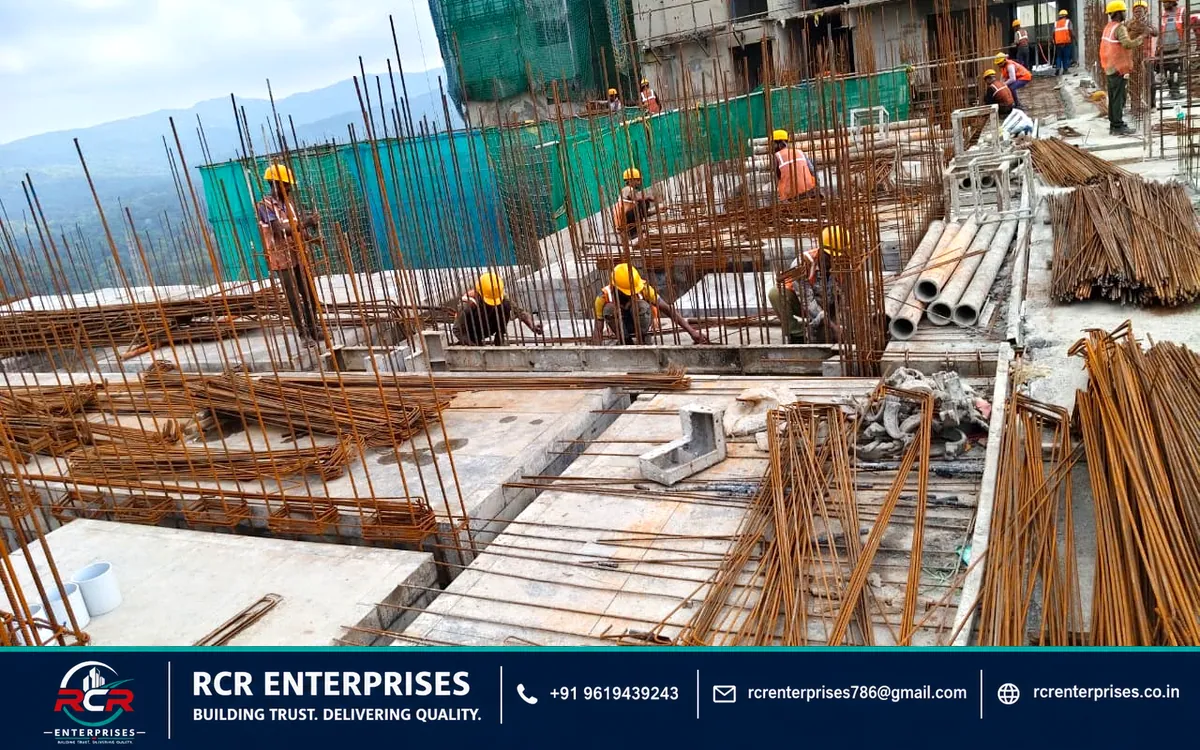
New vertical longitudinal bars (typically 16mm or 20mm) and closely spaced confining ties (8mm at 100mm c/c with 135° hooks) are tied around the perimeter of the existing column.
Step 5: Applying Epoxy Bonding Agent & Formwork
A structural epoxy bonding agent (like Nitobond EP) is applied to the old concrete surface to ensure a molecular bond with the new pour. Rigid watertight shuttering is erected.
Step 6: Pumping Non-Shrink Micro-Concrete
Because the gap between the old column and shuttering is narrow (75mm to 100mm), standard concrete will honeycomb. Free-flowing, self-compacting, non-shrink polymer micro-concrete (e.g., Renderoc RG) is poured or pumped from the top, consolidating without vibrators.
Does your property need structural auditing or strengthening? Check our specialized Structural RCC Solutions and Renovation Work, or request an on-site structural evaluation.
Planning a Civil or RCC Project?
Talk to our master engineers and get direct item-rate or turnkey quotations.