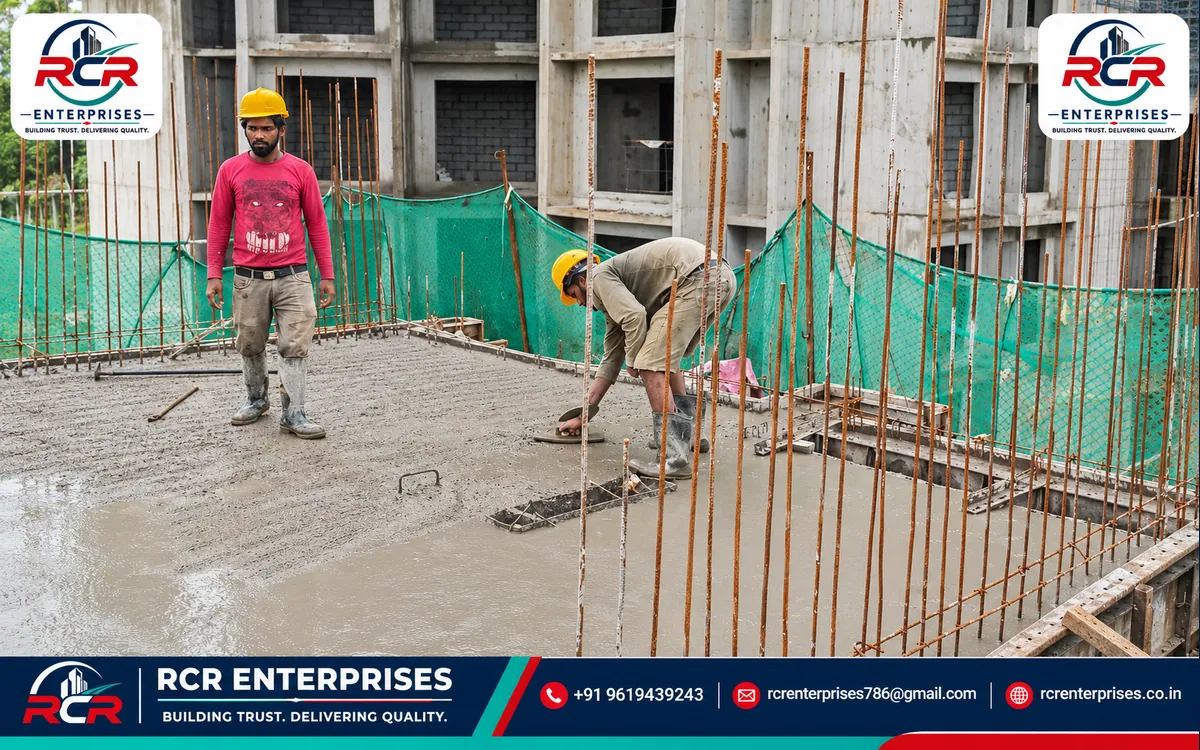
Plastering protects your brickwork masonry and reinforced concrete framework from moisture intrusion while delivering smooth, paint-ready architectural surfaces. In high-rainfall regions like Palghar, Virar, and Vasai, improper plastering ratios or skipping joint reinforcement leads to unsightly shrinkage cracks and monsoon dampness.
Cement-to-Sand Mix Ratios & Thickness Specifications
| Application | Specified Thickness | Mix Ratio (Cement : Plaster Sand) | Finishing Type |
|---|---|---|---|
| RCC Ceiling Plaster | 6mm – 8mm | 1 : 3 or 1 : 4 (Neeru finish) | Smooth float finish |
| Internal Brick Wall Plaster | 12mm – 15mm | 1 : 5 or 1 : 6 | Smooth trowel / pop ready |
| External First Coat (Rough) | 12mm – 14mm | 1 : 4 with waterproofing compound | Rough combed key surface |
| External Second Coat (Finish) | 6mm – 8mm | 1 : 3 with fine screened sand | Sand-faced sponge texture |
Why Galvanized Iron (GI) Chicken Mesh is Mandatory
Differential thermal expansion between concrete columns/beams and AAC blocks/red bricks causes 90% of all diagonal wall cracks. We fasten a 200mm wide GI chicken wire mesh (24-gauge, 12mm aperture) across every RCC-masonry junction with steel washers and concrete nails prior to applying the first plaster coat.
Planning a Civil or RCC Project?
Talk to our master engineers and get direct item-rate or turnkey quotations.