Columns carry the vertical gravity loads and lateral earthquake forces of the entire building down to the foundations. While concrete is exceptionally strong in compression, it is brittle in tension. Precise steel reinforcement detailing under IS 456:2000 and IS 13920:2016 (Ductile Detailing Code) ensures that structures across Mumbai, Pune, and Thane bend safely during seismic shockwaves rather than collapsing suddenly.
Key Rules for Column Reinforcement Detailing
1. Lapping Zone Rules: Never Lap at the Beam Junction
One of the most common site errors is lapping vertical column bars directly at the floor-slab junction. Under earthquake sway, maximum bending moment occurs at the column ends. Lapping must strictly occur in the middle half of the clear column height ((H/2)), where bending moment is minimal.
2. Staggered Lap Splices
Never lap 100% of column bars at the same horizontal level. Splices must be staggered so that no more than 50% of the bars are lapped at any single cross-section, with an axial distance of at least 1.3 times the lap length ((1.3 imes L_d)) between adjacent laps.
3. 135-Degree Seismic Hooks for Ties and Stirrups
Traditional 90-degree hooks open up immediately during ground shaking, allowing vertical bars to buckle outward. IS 13920 mandates:
- All ties and stirrups must terminate with 135-degree seismic hooks.
- Hook extension length must be at least (10 imes ext{bar diameter}) or 75mm (whichever is greater).
4. Confining Reinforcement (Closely Spaced Ties)
Within a distance of (L_0) (typically 450mm to 600mm) from the top and bottom of every beam-column joint, column ties must be spaced closely (typically 75mm to 100mm center-to-center). In the mid-height zone, spacing can increase to 150mm - 200mm.
Beam Reinforcement Detailing Essentials
Beams experience positive moment (sagging) at the mid-span and negative moment (hogging) over the supports:
- Development Length ((L_d)): Top and bottom bars reaching the end columns must be anchored into the column core with a 90-degree bend of at least (L_d = 50 imes ext{dia}).
- Beam-Column Joint Rings: Special horizontal stirrups must continue inside the beam-column intersection, preventing catastrophic joint shear failure.
Did You Know? The Mumbai Metropolitan Region (MMR) and parts of Pune fall under Seismic Zone III (Moderate Earthquake Zone). Adherence to IS 13920 ductile detailing is a mandatory statutory requirement for all RCC approvals.
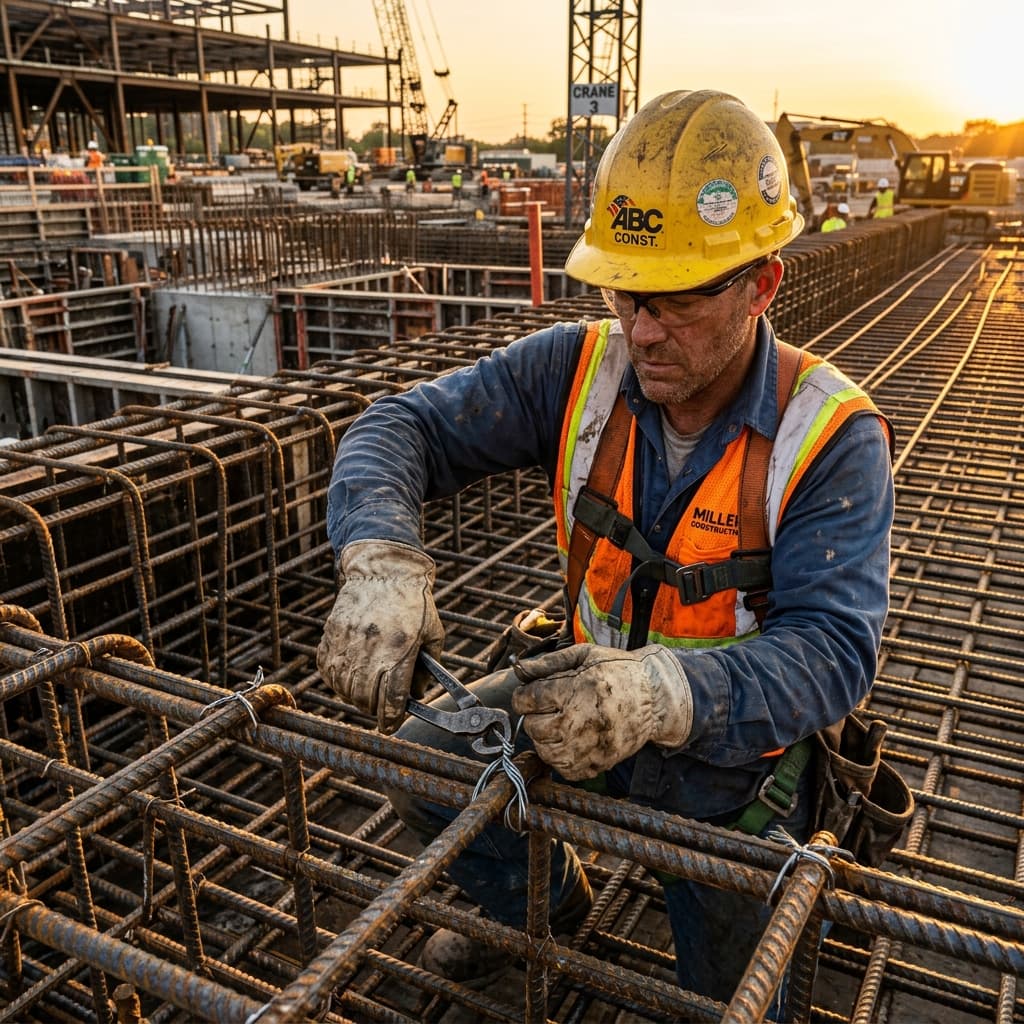
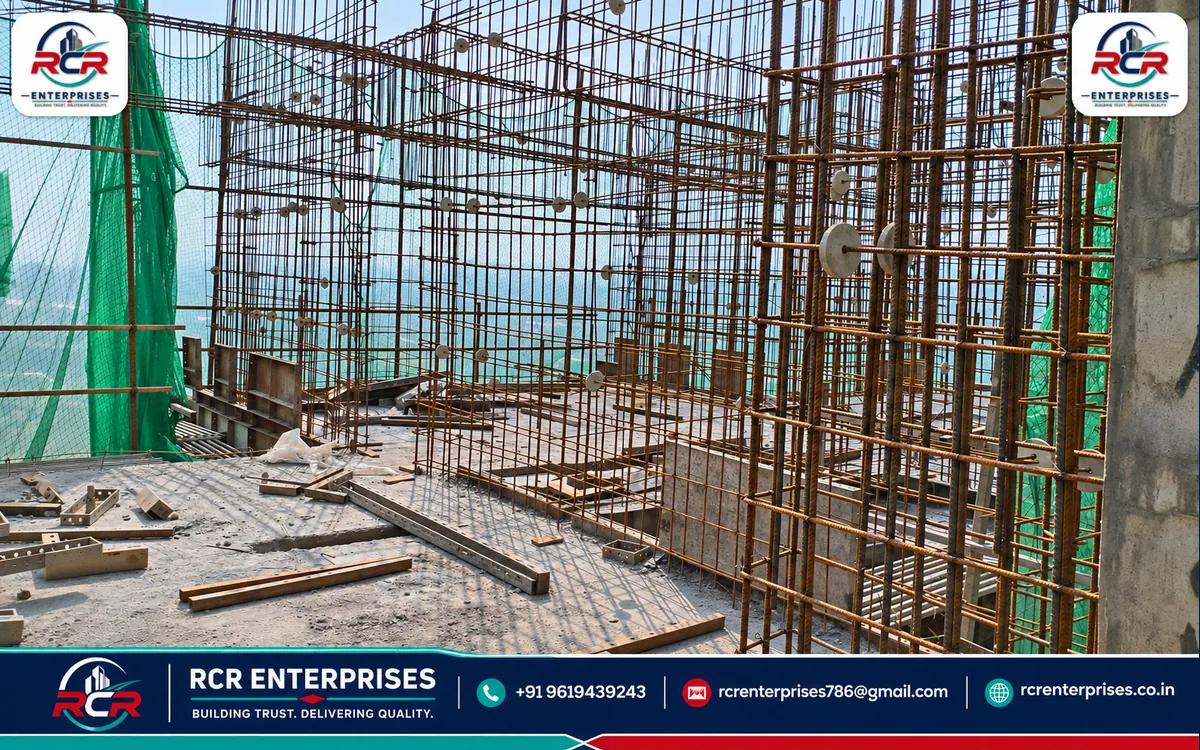
At RCR Enterprises, our site supervisors and bar benders are rigorously trained in blueprint reading and seismic hook fabrication. Explore our Column & Beam Work Services or inspect our rebar grid pictures in our Gallery.
Planning a Civil or RCC Project?
Talk to our master engineers and get direct item-rate or turnkey quotations.